Whole-Home Mold Remediation in Lafayette, LA
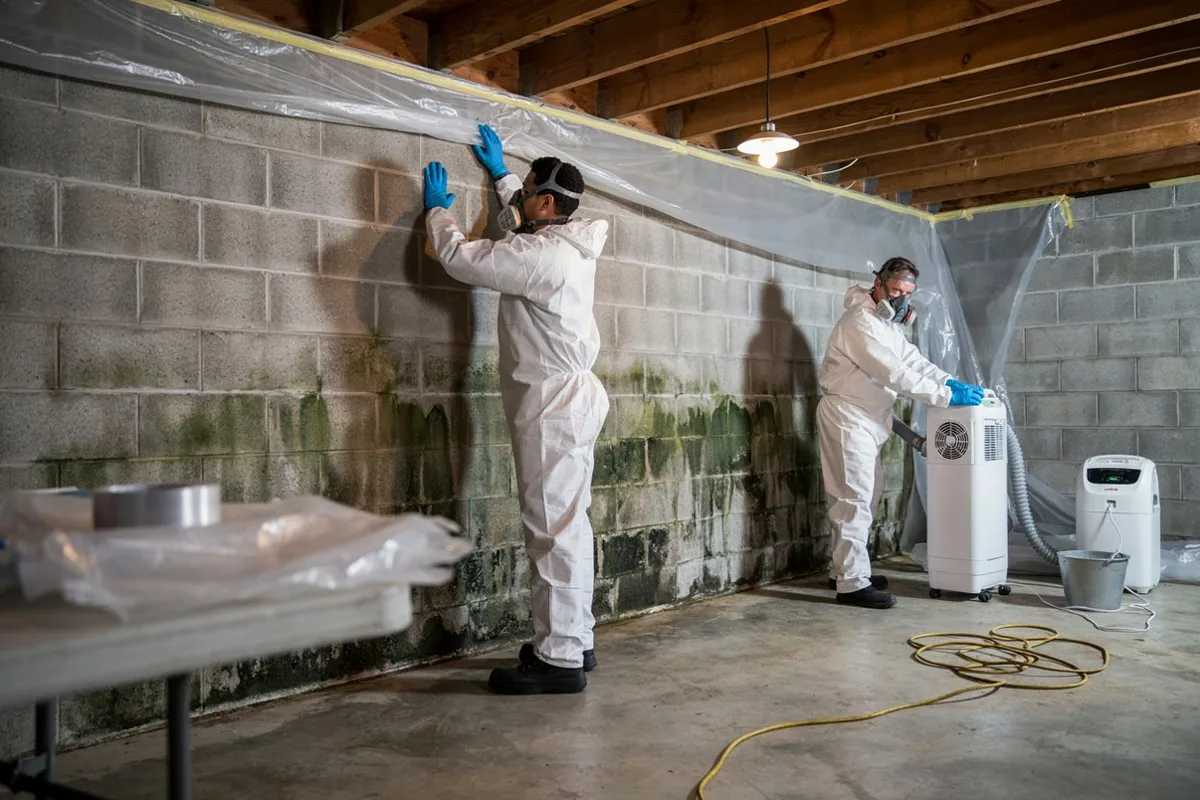
Sometimes it isn’t one wall. The house took water in August 2016 and was dried in a hurry because the family had to get back in. A rental sat empty through a wet spring with the air conditioning off. A slab leak under the kitchen ran for a year before the floor told anyone. Now there is growth in three rooms, a smell in two more, and you don’t know where it stops. Call and tell us how far it goes — we handle whole-home mold remediation in Lafayette and across Acadiana.
What makes it a whole-home job
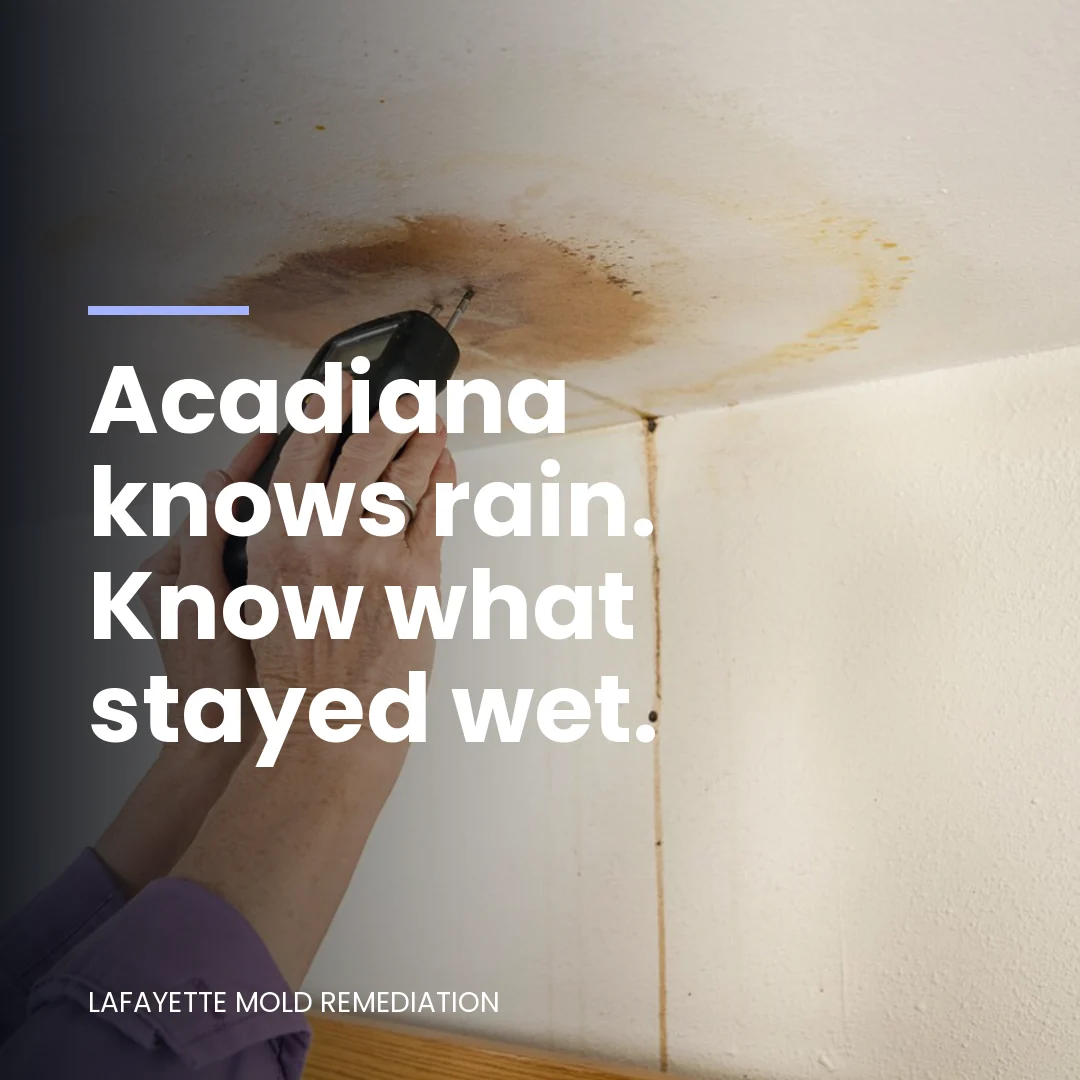
Not the square footage of the house — the number of rooms with wet material. Moisture readings across every affected room set the scope: which walls get opened, how high the cut goes, which ceilings and floors are involved, and whether the duct system is part of it. What makes a mold problem expensive is rarely the mold itself. It’s how far the affected area spreads, and how many materials it reached before anyone opened a wall.
What stayed wet after the water left
- Flood water that came in and drained out in a day still soaked the bottom plate, the insulation, and the back of every sheet of drywall it touched.
- A house that was dried from the room side can read dry on the paint while the cavity behind it stays wet for weeks.
- Crawl spaces, attics, and wall cavities dry last and deserve attention after any water intrusion.
- Old water damage can matter again the week the house goes on the market — Louisiana’s disclosure form asks about it by name.
Tell Us When The Water Problem Started, 24/7
How a multi-room job runs
We work in phases so the family can keep living in part of the house where that’s possible. Each phase gets its own containment under negative pressure. Drywall, insulation, carpet and pad, cabinets that got wet from behind, and ceiling material come out and are bagged inside the plastic. Framing and slab are cleaned in place and HEPA-vacuumed. Nothing closes until the wood reads dry. If the duct system carried it, that becomes HVAC and duct mold remediation inside the same plan. Where someone in the house is already reacting, or the work reaches every room, staying elsewhere for a few days is sometimes the practical call — we’ll say so up front.
The 2016 houses
Water went into thousands of homes in Lafayette and Youngsville that August, a lot of them slab houses in subdivisions less than ten years old, most of them outside the mapped flood zone and without flood insurance. The common story: carpet out, drywall cut at two feet or not at all, fans for a week, new flooring by Thanksgiving. Some of those houses have had a room that smells wrong every rainy week since. Storm gone, moisture may remain. If that’s your house, tell us what was done in 2016 and what you’ve noticed since.
What you get when it’s done
A written report covering every room: what came out, from where, and why. Louisiana law requires it. On a job this size it is also the document that will matter most to a buyer, an adjuster, or a tenant later.