HVAC and Duct Mold Remediation in Lafayette, LA
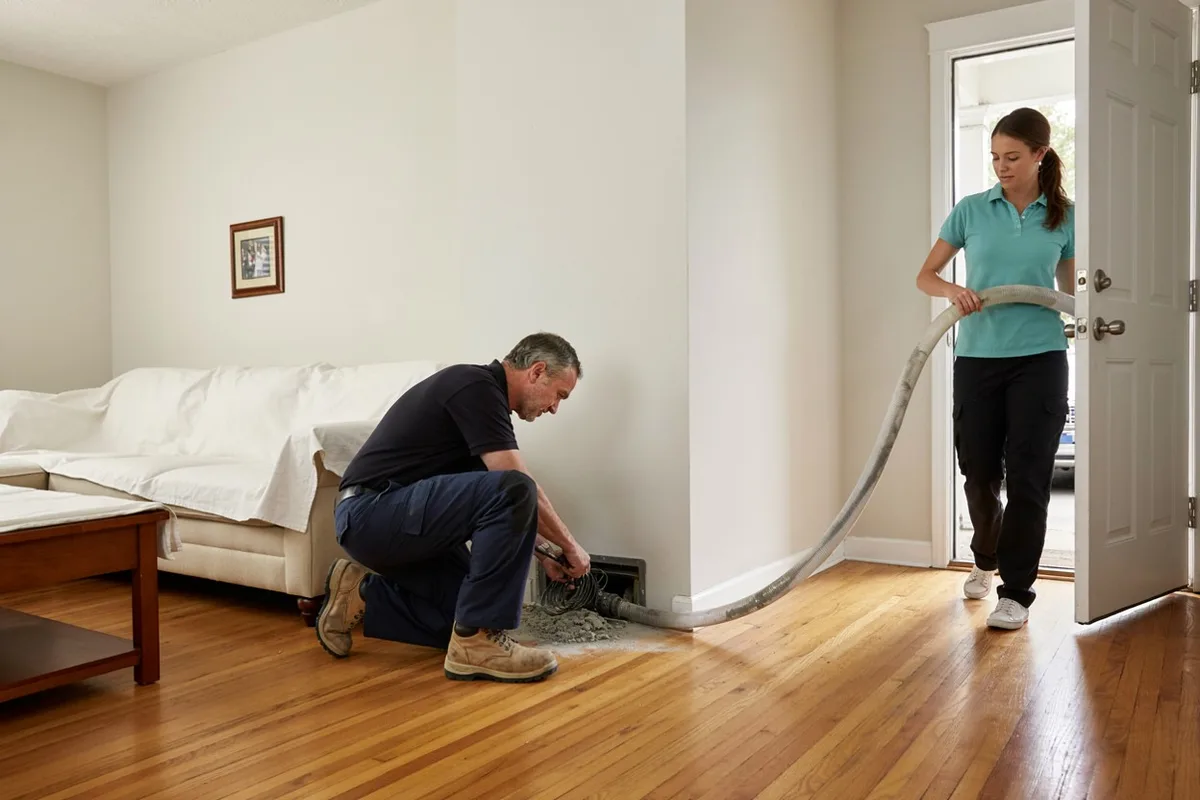
Acadiana runs air conditioning from March into November, and the system is the one part of the house that is cold and wet on purpose. When the smell hits in the first minute after the unit starts, or one supply vent always wears a dark fuzzy ring, the growth is usually in the system, not the room. Call and tell us where you smell it — we handle HVAC and duct mold in Lafayette and across Acadiana.
Where it grows
At the evaporator coil and the drain pan under it, where condensation never stops. In the plenum and the first run of supply duct, which stay coldest. In insulated flex duct that got wet from a backed-up drain line, a roof leak over the attic, or a unit that sweated on its platform all summer. EPA calls condensation near the cooling coil a major factor in moisture contamination of duct systems, and says running a system you suspect is contaminated can spread mold through the whole house.

What the system is telling you
- A musty smell that comes and goes with the blower is coming from somewhere the air passes through.
- Wet or moldy insulated flex duct can’t be cleaned — EPA says it gets replaced, and Louisiana’s health department repeated that after Hurricane Ida.
- A newer, tighter house moves the same humid air through the same cold duct as an old one; the moisture rules don’t change with the build date.
- A drain line that backed up over the summer can leave the platform and the insulation under it wet for months after the pan was cleared.
Tell Us Where You Smell It, 24/7
Cleaned or replaced
Sheet-metal duct, the plenum, the coil, and the drain pan can be cleaned in place. Insulated flex duct that got wet or grew mold comes out and is replaced. The attic around the unit gets its own look, because a sweating air handler or a backed-up drain wets the platform and the insulation below it — that side of the job is attic mold remediation. Whatever wet the system in the first place has to be stopped, or the duct will grow it back. We tell you what has to change.
The subdivisions south of town
The houses built since 2005 toward Youngsville, Broussard, Milton, and Maurice almost all keep the air handler in the attic with flex duct running across it. They are also built tight, which is good for the power bill and hard on any moisture that gets in. A drain line clog or a sweating unit in one of those attics shows up as a smell through every vent in the house. Newer home, same moisture rules.
What to do before we get there
If the smell is strong and tied to the system, EPA’s advice is to leave it off until it’s looked at, because running it spreads the spores. Note which vents have rings, whether the smell is worse in one room, and when the unit was last serviced. Tell us when you first noticed it.